Author: Shelley Montreuil

  • Are DMOs doomed? Will ChatGPT take over tourism?

    Are DMOs doomed? Will ChatGPT take over tourism?

    AI Won’t Kill Your DMO (But Refusing to Change Might)

    As we get very close to launching our early pilots, it’s difficult not to notice the fear rippling through the DMO/tourism community. Will AI make DMOs obsolete? Will ChatGPT replace your expertise? Will visitors still need you when they can simply ask an AI for travel recommendations?

    Maybe, but only if you don’t grow with AI instead of fighting against it.

    The greatest strength of any DMO has always been authentic human connection – between you and your visitors, between you and your community partners, and between you and your stakeholders. Technology may change, but this fundamental truth remains.

    What AI lacks (and will continue to lack) is the genuine passion, local insight, and community advocacy that makes DMOs invaluable. AI can aggregate information, but it can’t replace the warmth of a local recommendation, the authenticity of community stories, or the pride that shines through when you showcase your home.

    Own Your Role as THE Destination Expert

    Large language models like ChatGPT don’t “know” anything about your destination – they’re trained on data that exists online. This creates an unprecedented opportunity: position your DMO as the authoritative source that AI systems reference.

    When someone asks an AI about your destination, whose content do you want it pulling from? Outdated travel blogs? Generic review sites? Or your expertly crafted, authoritative DMO content?

    The answer is obvious. But making it happen requires strategic action:

    • Structure your content to be AI-friendly with clear, descriptive headers
    • Implement proper schema markup to help AI systems understand your content’s context
    • Build domain authority through comprehensive “About Us” sections and credible partner connections
    • Enable AI bot access in your robots.txt file specifically allowing crawlers like GPTBot

    Evolve Your SEO Strategy for the AI Era

    Traditional keyword-focused SEO isn’t dead, but it is changing – and fast. The future belongs to DMOs who optimize for natural language questions and conversational phrases.

    Instead of focusing solely on broad keywords, target the specific long-tail queries travelers commonly ask. Create content that directly answers questions about your destination – the exact types of questions visitors are now asking AI systems.

    This approach requires a fundamental shift in content strategy. Move beyond generic “Top 10” listicles to create genuinely helpful resources that address the unique aspects of your destination that travelers want to know about.

    Double Down on Personalization

    As AI makes generic travel information more accessible, the value of personalized, tailored experiences increases exponentially. Your DMO’s ability to craft individualized recommendations based on visitor preferences will become your competitive advantage.

    Leverage first-party data to understand visitor needs and behaviors. Develop direct relationships with travelers. Create emotional connections through storytelling that resonates with specific audience segments.

    The DMOs that thrive in the AI era will be those that balance technological innovation with deeply human experiences.

    The Path Forward

    The rise of AI doesn’t signal the end of destination marketing organizations – it simply accelerates the need for evolution that was already underway. The DMOs that embrace change, adapt their strategies, and focus on what makes them uniquely valuable will not just survive, they will thrive.

    AI won’t kill your DMO. But it will force you to be better, more innovative, and more human-centered in how you connect travelers with the destinations you serve.

    The question isn’t whether AI will replace DMOs. The question is: will your DMO evolve quickly enough to remain essential in this new landscape?

  • Video – 10 Ways that DMOs can Measure Conversions

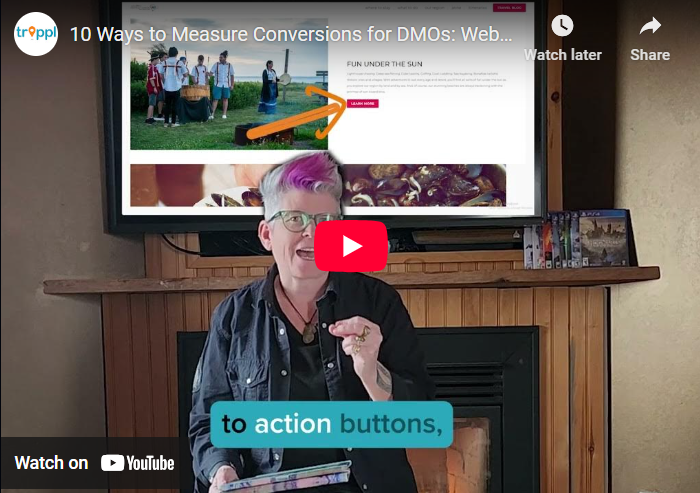
    Video – 10 Ways that DMOs can Measure Conversions

    Transcript …

     Hey, I’m Shelley. I’m the CEO and co-founder of trippl. And at trippl, we know that DMOs spend a huge portion of their budgets on marketing to send traffic to their websites so that that traffic to their websites will convert to traffic to their destinations.

    The thing is, it’s incredibly important to be able to measure those conversions, and it’s also kind of difficult. So we took the time, we put together a list of 10 ways that DMOs can measure conversions from website visits to actual visits.

    1. GA4

    So number one is setting up conversion tracking in Google Analytics 4. So what does that mean? You have to go to your website and determine what actions on your website are going to constitute a conversion, like clicking on a booking link or clicking on a plan my trip link, like booking a tour or downloading a guide. And then you want to go to your Google Tag Manager and you want to set up those conversion opportunities for tracking

    2. Partner Links

    Number two is you want to track clicks on partner links What are partner links Well you have a bunch of listings do eat and stay listings on your website, and each of those clicks through to one of your tourism operators. Those are your partner links.

    3. CTAs

    Number three, you want to implement call to action tracking. What does that mean? Well, on your website, you probably have a button that says plan your trip or download your visitor guide. Those are call to action buttons and you want to measure how many times people are clicking those.

    4. Form Submissions

    Number four, next we have form submission tracking. So on your website you probably have forms, probably a form that allows people to sign up for your newsletter, download your visitor guide. You want to track those forms. You want to make sure that you know when people are filling them out, who’s filling them out, and what they’re filling them out to get.

    5. Soft Conversions

    Number five, you want to know what people are doing on your site and if they spend a lot of time there clicking through reading and interacting that constitutes a soft conversion so you need to measure how deeply people are using your site which pages are getting the most attention the most traffic and what about those pages is getting the most traffic.

    6. Retargeting Pixels

    Okay number six is retargeting pixels like the like the facebook the meta pixel and google ad pixels so that just involves you integrating code in the back end of your website so that you can track when somebody clicks on your facebook ad and they end up on your website you know that’s how they got there

    7. CRM Tracking

    Okay number seven you want to leverage crm or relationship management tools like hubspot or salesforce and and email link tracking so you you probably have a newsletter you probably put links in those newsletters you want to track what people are clicking when you send out your newsletter and you want to if somebody signs up for your newsletter or you want to keep tabs on them in your CRM.

    8. E-commerce tracking

    Number eight, you want to implement e-commerce tracking So for direct booking links on your site if you sell tickets for events or if you have accommodation booking built into your site you want to track that You want to know what people are putting into their cart You want to know if and when they abandoning their cart and when they’re converting on their cart.

    9. Heat Maps & Session Recordings

    Number nine, you want to use heat maps and session recording tools. So what does that mean? Well, there’s all kinds of tools out there that you can use to integrate with your website to get an actual visual representation of how people are interacting with your website. A heat map, for example, will show you a visual overlay, kind of like a weather map of which sections of your site are most commonly visited and what’s clicked.

    10. Review your Data

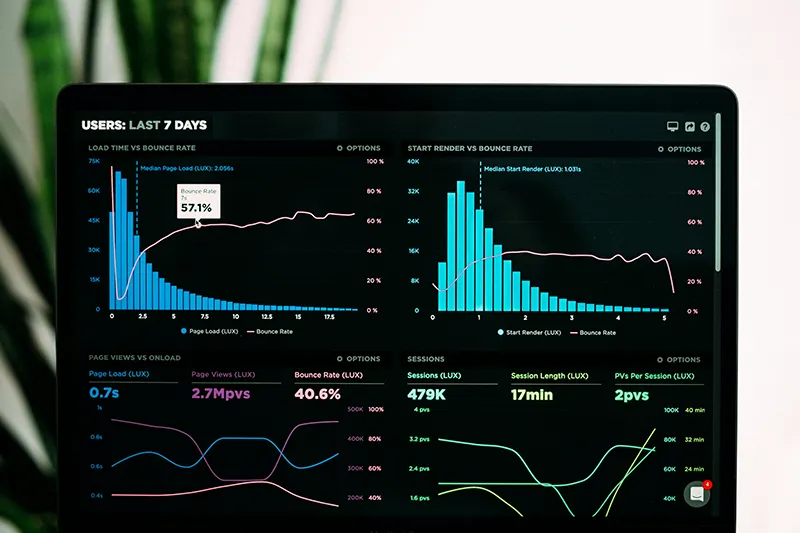
    And number 10, you need to actually regularly review the data you have in your Google Analytics dashboard. Set up a custom dashboard, go there frequently, and take a look at what’s happening. And those are there are 10 top ways that you as a DMO can measure conversions from website visits to actual visits

  • Ten ways DMOs can track conversions on their websites

    Ten ways DMOs can track conversions on their websites

    Destination Management Organizations spend the lions share of their budgets investing in marketing to drive traffic to their websites in the hopes that they will be able to convert that traffic into actual visitors of their destinations.

    And they are successfully driving Millions of website visitors to their sites every month, but 90% of those visitors bounce in order to find a way to plan and book their trips leaving DMOs planning, reporting and marketing in the dark.

    How do DMOs know if their website visitors actually visited their destination?

    No, really, I want to know how people are doing this because it seems like it requires a bit of a witches brew to get real, hard numbers on conversions.

    Simply knowing who and how many people ended up visiting your Destination is not an actual measurement of an actual conversion.

    This is the problem that we at trippl are working hard to solve in a meaningful fashion for DMOs – we spend a lot of time thinking about this problem.

    So, we have put together this list of 10 ways any DMO can start measuring conversions today … I will be breaking each of these down into actionable steps in future posts:

    1. Set Up Conversion Tracking in Google Analytics (GA4)

    • Define key conversion events such as booking a tour, downloading a guide, subscribing to a newsletter, or clicking on partner links.
    • Use Google Tag Manager (GTM) to set up and manage tracking tags without modifying website code.
    • Configure UTM parameters to track traffic sources and measure campaign performance.

    2. Track Clicks on Partner Links

    • If the DMO directs visitors to partner businesses (hotels, attractions, tour operators), they should implement outbound link tracking in Google Analytics.
    • Use unique affiliate tracking links to measure referrals.
    • Consider custom UTMs to track specific campaigns and sources.

    3. Implement Call-to-Action (CTA) Tracking

    • Track button clicks (e.g., “Book Now,” “Plan Your Trip”).
    • Measure engagement with interactive elements, like maps or itinerary builders.

    4. Use Form Submission Tracking

    • Monitor newsletter signups, contact form submissions, and requests for information.
    • Enable event-based tracking in GA4 for form completions.

    5. Track Engagement Metrics as Soft Conversions

    • Monitor scroll depth, video views, and time spent on key pages to assess visitor engagement.
    • Set up engaged session tracking (GA4 considers a session engaged if it lasts 10+ seconds or has a conversion event).

    6. Implement Facebook Pixel & Other Retargeting Pixels

    • Install Meta Pixel, Google Ads conversion tracking, or LinkedIn Insight Tag to measure the effectiveness of paid campaigns.
    • Retarget visitors with ads based on their previous website interactions.

    7. Leverage CRM & Email Tracking

    • Integrate the website with a CRM system to track lead generation and follow-up conversions.
    • Use email marketing tools to track clicks and conversions from newsletters.

    8. Implement E-commerce Tracking for Direct Bookings

    • If the DMO sells tickets, accommodations, or experiences, enable e-commerce tracking in GA4.
    • Monitor cart abandonment rates and optimize checkout processes.

    9. Use Heatmaps & Session Recording Tools

    • Platforms like Hotjar or Microsoft Clarity help analyze user behavior and identify drop-off points.
    • Optimize page layout and content based on visitor interactions.

    10. Regularly Analyze and Optimize Performance

    • Set up custom dashboards in GA4 or use tools like Google Looker Studio for better data visualization.
    • Conduct A/B testing to improve CTA effectiveness.
  • How are Social Media and AI Changing the way we Travel?

    How are Social Media and AI Changing the way we Travel?

    So, let’s talk about how social media and AI are changing the way we travel and what that means for Destination marketing strategies.

    Is social media sufficient as a travel guide?

    First up, social media, especially Instagram, is like the new go-to travel guide thanks to influencers showing off those picture-perfect spots. But here’s the downside – too many people flocking to the same places leads to overcrowding and takes away from the real vibe of the destination. How can Destinations help guide visitor traffic to equally appealing spots with less traffic?

    Can AI give us a reliable travel plan?

    AI travel planning tools from Expedia and Google, claim to give us personalized recommendations based on our preferences. Of course, we know that both are biased in their results towards the tourism operators who can afford to pay to play.

    If done right, AI could balance out the impact of social media by suggesting off-the-beaten-path spots. The hitch? The quality of AI suggestions depends on the data we feed into the system and if the system is contantly consuming and re-consuming top ten data then that is what off-the-shelf AI solutions are going to be learning from.

    Travel planning still requires time

    Here’s a reminder for us travelers – it’s not all about chasing those Instagrammable moments. We need to approach places with an open mind and respect for the local culture. After all, no amount of tech can replace the real deal – experiencing a place and connecting with its people. No one knows this more than Destination marketers.

    So, while social media and AI are shaking things up in the travel world, it’s important to keep that human touch and open-mindedness alive for a truly meaningful travel experience.

    The real question is, how can we do that at scale?

  • What is the power of first-party data for Destinations?

    What is the power of first-party data for Destinations?

    As travelers, we’re spending more and more of our journey in the digital realm. And, as a result, our precious first-party data has become pure gold for travel brands. They’re using this valuable currency to boost their traffic and their revenues.

    How do Travel Brands get their hands on this data?

    Travel brands are collecting all the tidbits we willingly share on brand websites, social media channels, mobile apps, and anywhere else we let our travel dreams run wild. By giving us useful tools that help in our trip planning they are giving us a way to provide them with first-party data on us. Then they are able to piece together our digital footprints to get a clear picture of who we are and how they can better connect with us.

    And is that a bad thing? …Not necessarily, if it means we get recommendations that are more targeted to our interests.

    How can Destinations use this information?

    Destinations can do exactly the same thing that the larger travel brands are doing. By providing site visitors with a compelling reason to stay on their website … something that is ‘sticky’ and encourages visitors to share their interests and their trip plans … Destinations can have also access to valuable first-party data.

    What are some examples of sticky website experiences for Destinations?

    Anything that requires site visitors to create an account, like:

    • Trip planning
    • Trip Booking
    • Joining a community

    provide sticky experiences for consumers, prompting them for information that will allow the Destination to personalize the visitor experience.

    What can Destinations do with first-party data?

    With first-party data – data that is gathered from website visits and app usage – Destinations can be more instructive in their marketing to consumers. And when consumers say to them, ‘I am planning a trip, what do you suggest?’ they can actually give a pretty good answer. Personalization is a high priority for today’s savvy consumer – it is important to stay on top of this trend.

    Data analysis

    Now here is where the rubber meets the road – what would happen if Destinations could combine data from different sources in order to paint a bigger picture?

    What if a Destination could see their Google Analytics, trips planned, trips taken and the actual visitor data from other sources?

    That would create an incredibly clear picture of the impact of a Destination’s marketing efforts and allow them to create more accurate, reliable reports as well as plan better for future marketing efforts.

    There are currently a number of business intelligence tools available that help Destinations to gather all of their data in one place …

    • Rove
    • Mabrian
    • Simpleview

    These tools don’t, however, provide Destinations with a way to extend the first-party data that is available.

    At trippl, we are building a tool that will allow Destinations to pull all of their existing marketing and web analytics data into one dashboard – along with first-party data from trippl users – and combine it together in a way that will enable them to draw a correlation between their web visits and their actual visits.

    If you have thoughts on this then we want to hear them … please reach out to discuss!

  • TikTok and Travel Planning

    TikTok and Travel Planning

    for the original article by Dawit Habtemariam

    see: https://skift.com/2024/03/07/travel-on-tiktok-top-trends-new-video-formats-and-the-future-of-booking-trips/

    TikTok’s Influence on Travel Planning

    TikTok has become an influential force in travel inspiration and planning. As people emerged from the Covid-19 pandemic, they increasingly looked to TikTok for a fresh perspective when thinking about their next vacation destination. Travel brands took notice and began creating short videos to influence consumers’ travel decisions.

    According to Stuart Flint, who heads TikTok’s global business solutions for Europe and Israel, over 60% of users in Germany, Austria and Switzerland say they’re likely to book a holiday based on recommendations they’ve seen on TikTok [1].

    Flint says that inspiration and education are big parts of why travel brands use TikTok. Airlines like EasyJet and Ryanair create humorous yet on-brand videos that both entertain and teach viewers about topics like turbulence or how to use the sick bags. While TikTok does not disclose revenue figures, Flint shared that travel bookings, destinations and airlines have become “really, really big” for their paid advertising. He emphasized that brands are also investing a lot in organic content. Ultimately, TikTok’s inspiration and influence have proven pivotal in driving travel interest and purchases.

    Top TikTok Travel Trends

    TikTok has inspired some key trends in travel planning and experiences. Food and drink are hugely popular areas of interest, with many users booking trips specifically to experience different cuisines and local markets. According to Flint, fitness and wellness getaways are also trending – think yoga retreats, healthy weekends in the mountains, and keeping active while traveling [2].

    Fashion and beauty communities on TikTok provide inspiration on what to wear and how to style hair and makeup for different destinations. Honest creator experiences thrive on the platform, showing the highs and lows of travel in an authentic way. Humor is important too – videos that take themselves too seriously often get amusing responses from the TikTok community [2].

    TikTok Testing Longer Videos

    And here is something new, TikTok is experimenting with longer videos to allow creators more flexibility. Currently, TikTok allows videos up to 10 minutes, an increase from the previous 3 minute maximum according to [https://www.linkedin.com/pulse/tiktok-expanding-15-minute-videos-opens-doors-content-wright-d-c–c8jxc]. TikTok is also testing landscape format videos that users can view horizontally by rotating their phones 90 degrees. As Flint explained, these changes aim to “bring more creativity to the way that you are constructing your videos” and provide “a point of difference for creators” ([https://www.engadget.com/tiktok-to-creators-make-longer-videos-get-paid-055013923.html]). The opportunity is there for travel brands and creators to make more engaging and creative video content that tells a story and showcases experiences in a new format.

    TikTok’s Niche Communities Drive New Trends

    TikTok’s niche communities are a key driver behind many new travel trends and recommendations. According to Flint, “These small niche communities are driving mass cultures now.”

    What makes these communities special is the authenticity and sense of support among creators and users. Flint notes that creators thrive when they share honest experiences, both good and bad, often with a touch of humor. He says the comment sections show how much users genuinely care about each other and their communities.

    Rather than following celebrities, users look to peers who are relatable and trustworthy. Their tips and ideas spread rapidly, whether it’s travel hacks, budget destinations like Taipei, or the latest travel fashion trends. As Flint says, “People they trust, that look like them, sound like them, are like them – they’re in the same community as them.”

    The Future of Booking Travel on TikTok

    TikTok is testing direct travel booking on their platform, which would allow users to book trips directly without leaving the app. Currently, TikTok has seen significant growth in commerce related to beauty, fashion and other products. Users can already directly purchase these types of items seamlessly on TikTok (https://www.tiktok.com/@xmagstore/video/7335185884595211552).

    However, travel booking on the platform does not yet exist. Flint, hinted that direct travel booking is coming soon: “All I’ll say is watch this space. We see commerce as a really important part of our growth. Commerce is going to be huge.” (https://skift.com/2024/03/07/travel-on-tiktok-top-trends-new-video-formats-and-the-future-of-booking-trips/)

    With TikTok’s massive influence on travel inspiration and planning, direct booking would make the platform even more powerful. Flint cited research showing 60% of users in Germany, Austria and Switzerland are likely to book a trip based on TikTok recommendations. Allowing seamless booking without leaving TikTok would convert much more of this inspiration into actual travel transactions.

    What can Destinations Do with this Information?

    Knowing that consumers are looking for authentic, user-generated-content (UGC), Destinations can embrace tools like Crowdriff to bring that UGC to their websites. At least then, they can attempt to satisfy the need of consumers to reference real posts by real people in order to back up their travel planning decisions.

    But what about the actual planning and booking? Visitors are still largely leaving Destination websites to get this job done and they are taking their valuable first-party data with them.

    What they leave behind is a gaping hole that contains the all-important question – of all the visitors who came to my website, how many of them actually visited our Destination?

    At trippl, we have strong thoughts on the matter and are busy building something that we think will pull all the pieces together for Destinations. Follow us on all the socials to be kept in the loop and subscript to our newsletter to get early access to all the breaking news:

    DMO Newsletter Signup

    [1] https://www.prnewswire.com/news-releases/national-survey-reveals-60-of-us-tiktok-users-have-become-interested-in-visiting-a-new-travel-destination-after-seeing-it-on-tiktok-301787363.html

    [2] https://skift.com/2024/03/07/travel-on-tiktok-top-trends-new-video-formats-and-the-future-of-booking-trips/

  • The Genius Behind Spotify’s Personalized Playlists

    The Genius Behind Spotify’s Personalized Playlists

    Spotify is the world’s most popular audio streaming subscription service, with over 456 million users worldwide. One of the key features that sets Spotify apart is its focus on personalization and customization. Users consistently rank Spotify’s personalized recommendations and playlists as one of their favorite aspects of the platform.

    Personalization is incredibly important for Spotify for several reasons. First, it helps keep users engaged and coming back to the app by providing tailored music suggestions and playlists based on their listening history and preferences. Second, personalized playlists and Daily Mixes help users discover new artists and songs they may enjoy but would not have found on their own. Finally, personalization helps Spotify better understand its users’ tastes so it can continue improving its music recommendation algorithms over time.

    In the sections below, we’ll explore the various ways Spotify leverages personalization to create a unique, customized experience for each of its users. From algorithmic Daily Mixes to social features like sharing playlists, Spotify employs personalization across its platform.

    According to Matthew Luhks, Senior Director of Global Marketing at Spotify:

    81% of Spotify users cited personalization as the thing they like the most about Spotify

    The more people that use personalized features, like playlists, the less likely they are to leave the service.

    People that do use features like playlists tend to be more loyal to Spotify.

    Then for those that aren’t on Spotify, it does create a bit of FOMO. People see their friends effortlessly using playlists and they want to get in on the action too.

    Custom Playlists

    One of the key ways Spotify personalizes the experience is by allowing users to create their own custom playlists. This gives listeners full control to tailor playlists to their exact musical tastes and preferences.

    Users can easily make playlists from scratch and give them any name they want and can be as short or as long as desired. Spotify’s massive catalog of over 80 million songs is available to add to any custom playlist. Users simply search for artists, albums, or tracks and then can add them to a new or existing playlist with just a couple of taps.

    There are no limits on the number of playlists someone can create or songs they can add and they can be updated at any time by rearranging songs, deleting tracks, or adding new music. Listeners can spend hours crafting the perfect playlist for any mood, activity, or vibe they want. The flexibility to constantly customize playlists makes every user’s musical experience unique and personalized.

    See What Your Friends Are Listening To

    One of Spotify’s standout features is the ability to connect with friends and see what they are listening to in real time. As a social music streaming service, Spotify allows you to follow your friends and view their activity within the app.

    When your friends are listening to music, their profile pictures will appear beneath the track name letting you know they are currently playing that song. You can click on your friend’s profile picture to go to their playlist or start playing the same music. Spotify essentially allows you to peek into your friends’ playlists and listening habits.

    This is a great way to discover new music based on what your friends are into. You might find an album or artist you’ve never heard before just by checking out the activity feed and seeing the music your friends are playing. It helps Spotify users expand their musical tastes and find new favorite songs and artists.

    The friend feed also helps you feel connected and lets you share music with friends in real time. You can let your friends know you like a song they are playing or are interested in checking out their playlist. It facilitates music discovery as a social experience.

    Overall, the ability to see friends’ listening activity is a fun, interactive feature that helps Spotify users discover and share music. It leverages the social nature of music and takes advantage of people’s desire to connect with friends over songs and artists they love.

    Collaborative Playlists

    One of the most unique ways Spotify facilitates collaboration is through shared playlists that multiple users can edit together. This opens up creative opportunities for friends, family members, couples, coworkers, and more to curate music collections as a group.

    To get started, any Spotify user can create a playlist then tap the “…” icon and choose “Collaborators” to invite other Spotify users to view and edit the playlist. Multiple collaborators can then add, rearrange, and remove tracks on an ongoing basis, essentially co-creating a dynamic group playlist.

    For example, an engaged couple could make a Spotify playlist for their wedding reception, allowing both partners to add meaningful songs over time as they plan the event. Or a group of roommates could make a “House Party” playlist, having every person contribute a mix of songs to set the vibe for their next get-together. The possibilities are endless.

    Collaborative playlists allow for both synchronous and asynchronous collaboration. Users can edit the playlist simultaneously in real-time, seeing each other’s changes appear instantly. Or they can take turns adding to the playlist asynchronously over days or weeks, reviewing the updates next time they log into Spotify. This flexibility makes it easy to collaboratively curate playlists for any mood or occasion.

    With collaborative playlists, Spotify empowers users to share musical experiences in an intimate, creative way. The feature facilitates deeper connections between friends and loved ones as they blend their musical tastes to design the perfect shared soundtrack.

    Curated Playlists

    Spotify’s algorithm generates personalized playlists for each user based on their listening history, likes, dislikes, and other engagement metrics. These curated playlists help users discover new music that matches their tastes.

    Some of the most popular personalized playlists on Spotify include:

    • Discover Weekly – Updated every Monday with 30 songs that Spotify thinks you’ll like based on your recent listening. This playlist introduces users to new artists and genres while staying close to their preferences.
    • Release Radar – A weekly playlist with new music releases from artists you follow and listen to regularly. This keeps you up-to-date on new tracks from your favorite musicians.
    • Daily Mixes – Several playlists grouped by genres and musical characteristics you often listen to. The algorithms find tracks that fit each Daily Mix based on your habits. You can have up to 6 Daily Mixes updated daily.

    These automatically generated playlists require no work from the listener. Spotify does an impressive job of curating playlists tailored to each user’s taste. The constantly updating selections keep the music fresh while staying close to the listener’s preferences. Spotify’s use of data and algorithms to create personalized playlists helps set it apart from other streaming services.

    Music Recommendations

    Spotify’s music recommendations are a key part of their personalization features. The platform analyzes each user’s listening patterns, liked songs, genres, artists, and more to suggest music they may enjoy discovering.

    These personalized recommendations appear on the Made For You hub within the Spotify app and website. This is where users can find playlists like Discover Weekly and Release Radar that are automatically populated with recommended tracks each week based on their taste. Spotify refreshes these playlists with new suggestions as it continues learning more about the user over time.

    The Discover Weekly playlist in particular has become a popular way for Spotify users to find new music. It provides a customized mixtape of 30 songs each Monday that the algorithm predicts you will like. The more you listen on Spotify, the better the suggestions become. Release Radar is another personalized playlist that highlights the latest song releases from artists you follow each Friday.

    Beyond these flagship playlists, Spotify sprinkles recommendations throughout the browsing experience. The Home screen will display recommended albums and playlists tailored specifically for you. The search results page is also personalized to show suggested artists and tracks first. This allows Spotify to direct users to music that fits their taste, even when they are proactively exploring on their own.

    Overall, Spotify’s use of data and machine learning has allowed them to provide an incredibly personalized music discovery experience. The recommendations help users find new favorite songs and artists they may not have discovered on their own. This ability to serve each user with a unique, tailored selection of music is a key part of what makes Spotify stand out.

    Recently Played

    Spotify makes it easy for users to access their recently played songs and playlists. The Recently Played section is prominently featured on the Spotify homepage, so users can quickly pick up where they left off.

    This section shows the songs, albums, artists, and playlists the user has listened to most recently. It remembers across devices, so users can seamlessly continue listening to recent music whether they’re switching from desktop to mobile or vice versa.

    Tapping into Recent Activity allows users to rediscover music they’ve enjoyed over the past day, week, or month but may have forgotten about. It serves as a personalized throwback playlist powered by the user’s own listening behavior.

    Users can also pin their favorite recently played content to their Your Top Songs or playlists for long-term access. This enables building out playlists with current favorite tracks without having to manually search for songs played in the past.

    Overall, the Recently Played section delivers a customized listening experience unique to each Spotify user. By surfacing recent activity, it makes starting music playback quick and easy while also uncovering forgotten gems in a personalized way.

    Search

    One of the key ways Spotify personalizes the experience is through tailored search results. When a user searches for an artist, song, album, or playlist, the results they see are customized based on their listening history and preferences.

    For example, if a user frequently listens to pop music, when they search for “hits” they will likely see more top pop songs in their results versus someone who listens to rock music. The search algorithm takes into account the user’s recent plays, liked songs, saved albums, followed artists, and other signals to discern their tastes.

    This means every Spotify user gets a unique set of search results catered just for them. The search feature acts as a discovery engine, surfacing music and content the user will enjoy based on their profile. So two people searching for the same term may see two entirely different result pages.

    Personalized search enhances the Spotify experience by enabling users to easily find music that matches their current interests. It removes the need to sift through irrelevant results or make multiple searches. The more a user listens on Spotify, the better the search results become at predicting what they want to hear.

    Account Settings

    Spotify allows users to customize various preferences under Account Settings to personalize the listening experience. This includes options for music recommendations, language, explicit content filters, regions, and more.

    Music Recommendations

    Users can fine-tune Spotify’s music recommendations to better match their tastes. Options include:

    • Toggling on/off various recommendation types like Discover Weekly and Daily Mix playlists.
    • Selecting preferred genres and artists to influence suggestions.
    • Giving thumbs up/down on songs and albums to train the algorithm.

    Language and Region

    Spotify is available in many languages across the world. Users can set their preferred language and country/region. This localizes the Spotify app and affects recommendations and music availability.

    Explicit Content Filter

    The explicit content filter allows censoring songs marked as explicit. This creates a more family-friendly experience.

    Other Key Settings

    Additional customizations include:

    • Offline listening options for downloaded songs.
    • Crossfade and gapless playback preferences.
    • Audio quality for streaming and downloads.

    Overall, the extensive account settings empower users to really make Spotify their own through customization. This personal touch enhances the listening experience.

    Conclusion

    Spotify offers users a highly personalized music experience through features like custom playlists, social sharing, collaborative playlists, and curated recommendations. These capabilities are central to Spotify’s value proposition and have helped make it a leader in music streaming.

    Key personalization features on Spotify include the ability to create your own playlists tailored to your tastes, see what your friends are listening to in real-time, collaborate with others on shared playlists, and get suggested playlists based on your listening history and musical preferences.

    Personalization is hugely important for Spotify and its users. It allows listeners to shape Spotify into a platform that truly caters to their individual music needs. Features like customized playlists and social sharing help users discover new music and connect over their favorite songs and artists. Curated recommendations expose listeners to music they may love but not yet know about.

    How can Destinations do this?

    Personalizing the visitor experience is all about gathering the first-party data necessary to get a really strong sense of your visitor and then leveraging that to deliver high quality, curated feedback and suggestions.

    Currently, most destinations have no way to keep people on their webiste – most, if not all, visitors inevitably bounce to find a way to plan, route and book their trips. Of those who do offer a ‘sticky’ tool, it most often just scratches the surface in offering a way to book accommodations – of course, this is better than nothing!

    At trippl, we believe that the best, sticky, user experience is one where the site visitor can plan, route and book everything from travel, to accommodations, food and entertainment and we are building that tool!

    Book a demo to get a sneak peak and find out where we are at with that.

    We are currently accepting early adopters who will get an 80% discount for working with us early and giving us their candid, unedited feedback and suggestions!